
UNESCO termed last year, 2019 as International Year of Indigenous Languages owing to the position, state and endangerment in which these languages all over the world are. According to Unesco, reasons for this endangerment vary across different communities and locations.
Indigenous people – who speak the majority of the 7.000 existing languages – are experiencing challenges alluding to migration, educational disadvantage, illiteracy, assimilation, enforced relocation and other discriminations.
In Ghana, about 80 indigenous languages are spoken. Within these, 11 are written and studied in schools, receiving government support. If we would accept that indigenous languages embody rich cultural identities, and that people should have the ability to use their home language as a prerequisite for respect of human rights, we can imagine how tribes who speak these languages that are not supported by the government have been discriminated upon, have their rights infringed and rendered illiterates (those who are not able to read and write in their native languages). Finally, society and the rest of the world would one day not only have an extinct of such languages but also their rich intangible cultural heritage and identity if care is not taken. A loss of one of these is a loss to the whole world.
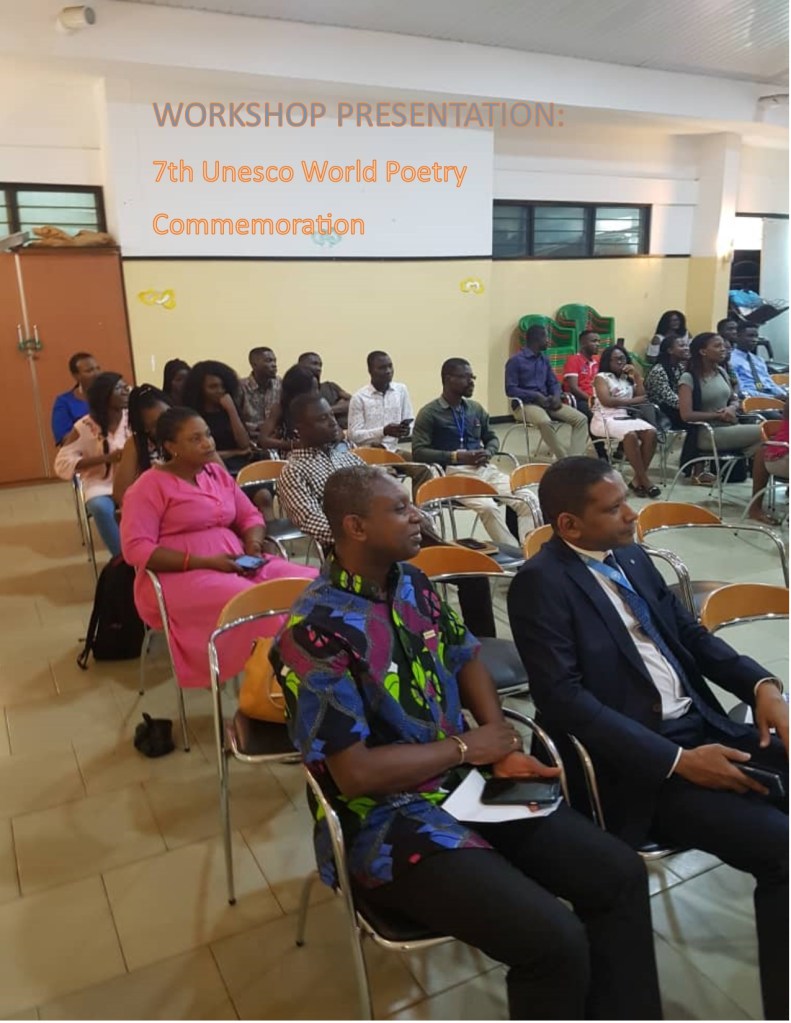
This year, the JUPI Team will continue the good work started last year so as to build upon its achievements. It is in this view that this workshop presentation has been included in the 2020 commemoration. Walk The Talk Club of University of Ghana and JUPI in collaboration with the its partners would engage in this workshop/ Presentation on the 19th of March, 2020, at the University of Ghana Maison Francaise, at 12.00 pm, using poetry as the platform with translation and analytical interpretation to explore the rich cultural identity and heritage behind spoken languages (indigenous and foreign) in order for them to be preserved.
Participants: We therefore call on translators, interpreters, poets, linguist, cultural activists, academia, civil societies to be part.
Registration and Participation: Send a personal introduction of yourself to info@jupionline.com and a form will be sent to you
N.B. Workshop participants should come with a copy of the poem to be used translated in their indigenous language. Provisions have been made for only Asante Twi, Ewe, Nzema, Ada languages. Indigenous foreign languages can be Russia, Arabic, Chinese, French, Spanish, Swahili, and German. You can only participate in the workshop discussion if you don’t have a translated copy of the poem. Participants should be seated at 11.00 pm for further briefing.
Certificate of participation will be awarded to participants. For other inquiries contact info@jupionline.com or 0244406727.
 Jubilee Projections International | JUPI
Leave a comment