
International Day of poetry which is the day for poets worldwide is becoming a very important moment on the Ghanaian calendar. Six years ago when it all started the organizers only thought of bringing poets together under one roof to have a unified front. This started well I recall when the likes of Civilian, Rhyme Sonny, Nii Ayi Solomon, Oswald Okaitei, Leander David performed on a single stage. Later years, came Nana Asaase, Poetry General and others. There was also the attempt to have a joint commemoration between Leander of the Walk The Talk fame and Black of the Ehalacasa fame. That effort led to the promotion of the commemoration by each group at different venues, time and date. It is good to see many groups and poets all over the place in Ghana as that speaks of the great literary potential of the country. Yet the numbers will speak little if the kind of poems and performances are not of good quality and hence the need at times for these groups to come together in an event like the World Poetry Day Commemoration, to share ideas and learn from each other. That dream still stands to be realized as Walk The Talk enters its seventh year.
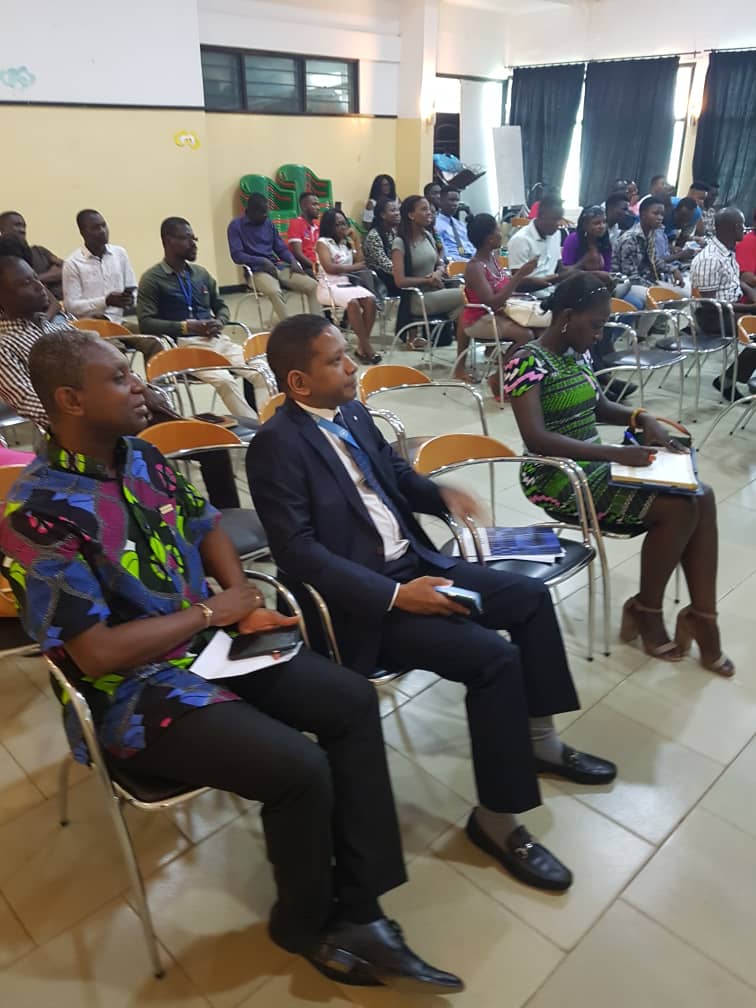
Walk The Talk has been very dynamic. They have grown into the JUPI Team with partners who have been very committed and continue to support activities of the commemoration on the legon campus till now. Today the celebration is commemorated within the school with student poets and language Clubs of The University of Ghana School of Languages whose engagement was to practice and enhance their studied languages. There were poems that day which were presented in Arabic, Chinese, Spanish, Kiswahili and Russia. The School this time also adopted our workshop which attracted Lecturers like Dr. Sarah (Kiswahili) and Dr. Antwi Boasiako (Russian section) and others from the chinese section. A graduate student in Linguistics also participated.
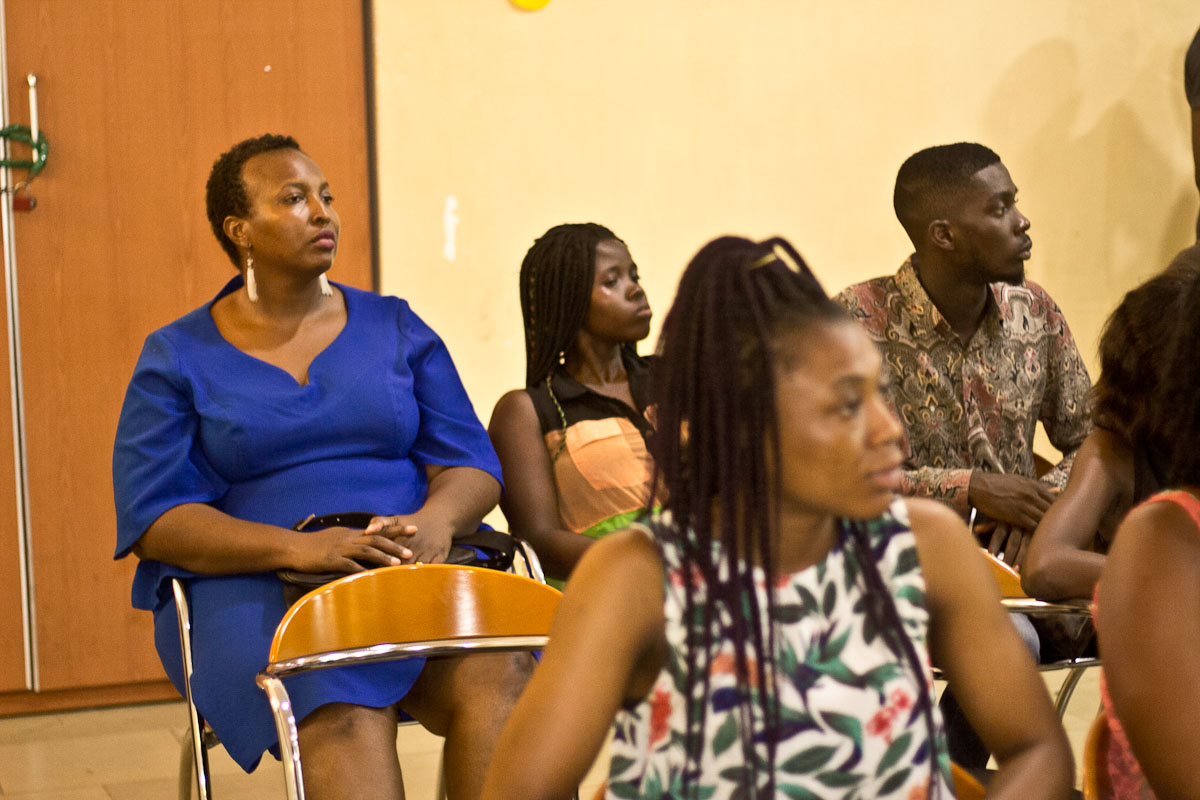
We were also grateful to have the University of Ghana’s only centre for careers and counseling supporting us and represented that day by Mrs. Ruth Opoku. The call from Unesco to dedicate 2019 to the preservation of indigenous languages enjoined our collaboration with The Bureau of Ghana Languages which supported us with a translation of the workshop poems needed into Asante Twi, Fante, Ewe, Nzema and Dangbe. They were also there to make presentations on the translated works.
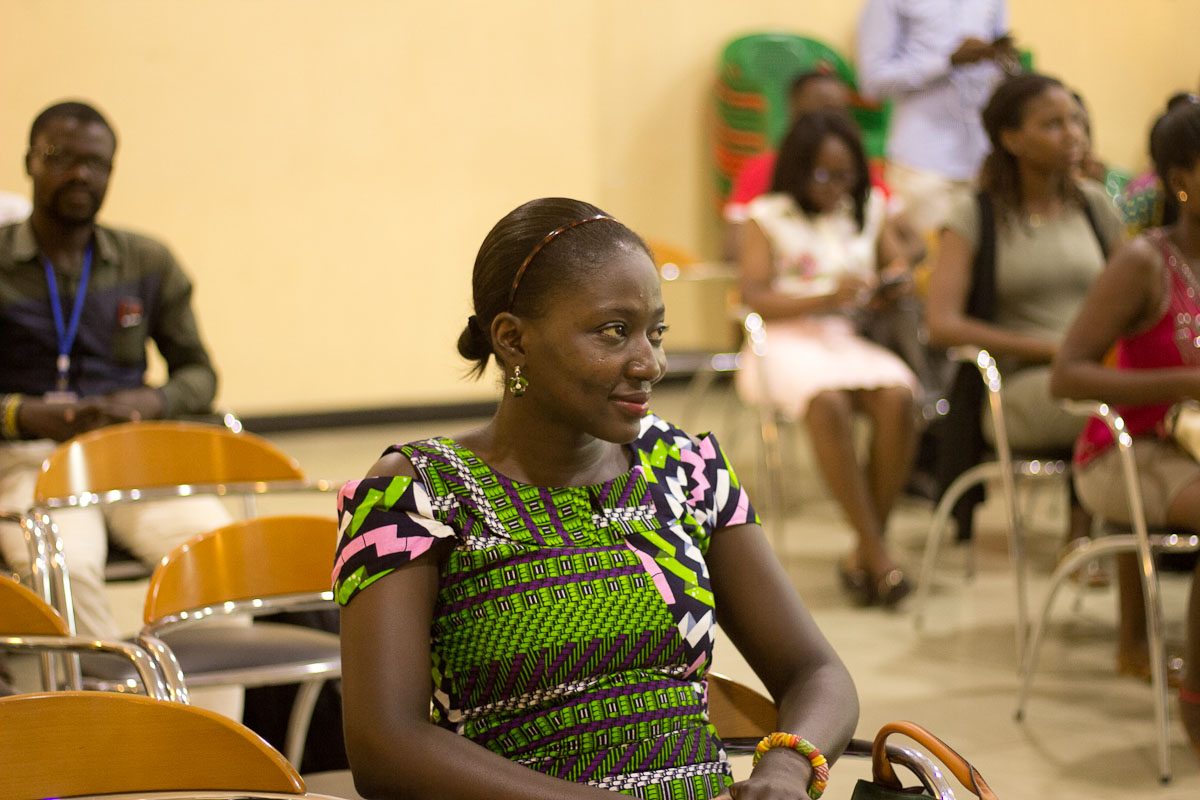
We had for the first time the participation of the Ghana Folklore Board whose director, Nana Adjoa, graced the occasion. It has began a long lasting partnership where Jupi will join hands with the Board to reach a larger audience in the dissemination of the rich Ghanaian intangible heritage. Part of the celebration took place online. There was a collaboration with an American based CSO Lokali that was organizing multicultural activities like JUPI and also promoting indigenous languages on the World Day of Poetry. This collaboration will be the beginning of a new relationship between Jupi and Lokali and will open up Ghanaian creative artist to the rest of the world.
The commemoration which took a three-fold approach was to cater for the needs of arts and culture, languages, and mental health. There is enough evidence to believe that the creative arts have a role to play in health care. Jupi last year finished their first campaign in support of mental health and a lot of people were sensitized to be mindful of their mental health status. They raised concerns about the state of the sector and gave preventive tidbits about the illness. The commemoration was another approach to engage directly with people suffering from the illness, to speed their recovery, reduce the stigma and increase their support base. As more activities are lined up for the year 2019, a lot more will be dedicated to mental health.
On the fateful day, local languages, arts and culture were preserved during the time for performances, workshop discussions and presentations. That of mental health was achieved in the other segment when we had the general public, officials and a patient of a Psychiatry Hospital to participate. A couple of months before the event, Jupi prepared the ground, engaging with patients from the hospital. The essence is to turn them into professionals so that they can take advantage of the creative arts industry which is taking shape. It was also a way of laying the road map to a successful Poetry Clinic in the country which is one of the Jupi Dreams.
Workshop


The workshop which was organized to ensure that the 2019 Year of Indigenous Languages declared by Unesco was realized, went well. It lasted for 3 hours after starting at 12:30 pm with a room that could contain over 150 persons, filled to capacity. Blind Willie Johnson’s poem, “Dark was the night” was the poem in focus. It was translated by the following: Emmanuel Asare (Asante Twi), Syvia Acqah Sampson (Fante), Evans Genny Mensah (Nzema), Benedicta Esi Anibri (Ewe), Enoch Adibuer (Dangme). Some of the presentations engendered the following comments:
The title began with colour and temperature of nature “Dark is the night, cold is the ground”. The land and atmosphere was in focus. Naturally, the nature of the land directly affects life and the coldness suggests a moment when life’s activity is not favourable like the night when most of human activities are at rest. The darkness of the night also sparks fear, an unusual feeling and a rare situation. This could be termed a bad omen in certain areas like often believed with the eclipses, especially of the moon (when the moon mainly being the major source of night light, suddenly loses its light).
Red symbolizes oil in “We all see red, it’s defining our colour”. It was liken to a bowl of red oil in the horizon. One made mention of the use of palm oil and corn for food and by the elders or priest for ritual purposes. At times, the oil is not only mixed with corn but also with yam. It is the belief that the spirits define, affect, determine or reveal to an extent, what goes on in real life (our colour). The Ga people of Ghana up till now sprinkle “kpepkle”, a blend of corn and red oil, on the ground during their homowo festival. This has become an integral part of the celebration which forms part of their culture (our colour). Red also represents the blood which is spilled on the ground also for ritual purposes. To talk of the red that is associated with the sun, it is occasionally seen at certain times just before it sets or rises. That of the rising sun will suggest hope, a new day and new beginning. For the setting sun, it reminds one of death, dread and horrific scenes in the past.
The ground doesn’t get cold in this part of the world. So the coldness will rather be felt mostly at a moment when the ground gets wet, a participant said interpreting the Ewe version of Blind Willie’s poem. The same said that since the Ewes live along the coast, one can refer to the blue as the sea and the black as the complexion of the people who live along the coast.
To talk of the end and a new start, as mentioned by the poem, participants reflected on the Christian belief of the second coming of Christ and how Christians have to be prepared so they are not taken by surprise.
The end also sparked the idea of cessation of life in man and with the colour blue which was referred to as the sea by some participants a short diversion was made when submissions concerning the sea were made. The waters reminded some of the participants on the theme of death. That, the people of Ada believed that the point where the Volta entered the sea at Ada was the entrance point for all souls before entering the next world.
The similarities that run through some of these cultural practices gave the impression that we are all one people but some way somehow have been separated. There was revelation on the belief that before that final journey of the dead, the dead was given money which was places in their casket, a practice which was common among most tribes in Ghana. Dr Sarah Marjie, a Ghanaian lecturer in Kiswahili told a shocking revelation of a Kenyan visiting lecturer who is a Luhya, visited Tamale in the north of Ghana only to realize that the frafra language was mutually intelligible to the Kiluhya language in Kenya which she speaks. Dr. Antwi Boasiako also chipped in with a study he was undertaking on some of the similarities that were often seen in the local languages with reference to certain words which sounded similar although taken from different languages are the same in meaning. Like shika ( Ga) and Sika ( Twi) with similar sounds though in different languages, meant the same (money).
Last two lines of Blind Willie Johnson’s poem really talk about the final place of the body (man) when in the ground. There will be no light penetrating there and it will mean darkness (night). We will also look at night as a moment when the laborer has ended his task for the day (life) and must rest (sleep), just as we sleep at night. This particular night is free from the light from the moon and stars. Occasionally, a night can be without light from the sky but on earth, you can only have this perpetually when you are hidden in the ground (buried). Hence the term, “darkness”, “dark was the night”. You will be away from the sun by day which produces the heat and the reason behind the coldness of the ground. It was also repeated “cold was the ground” because that state will always remain while in the ground (buried).
Commemoration
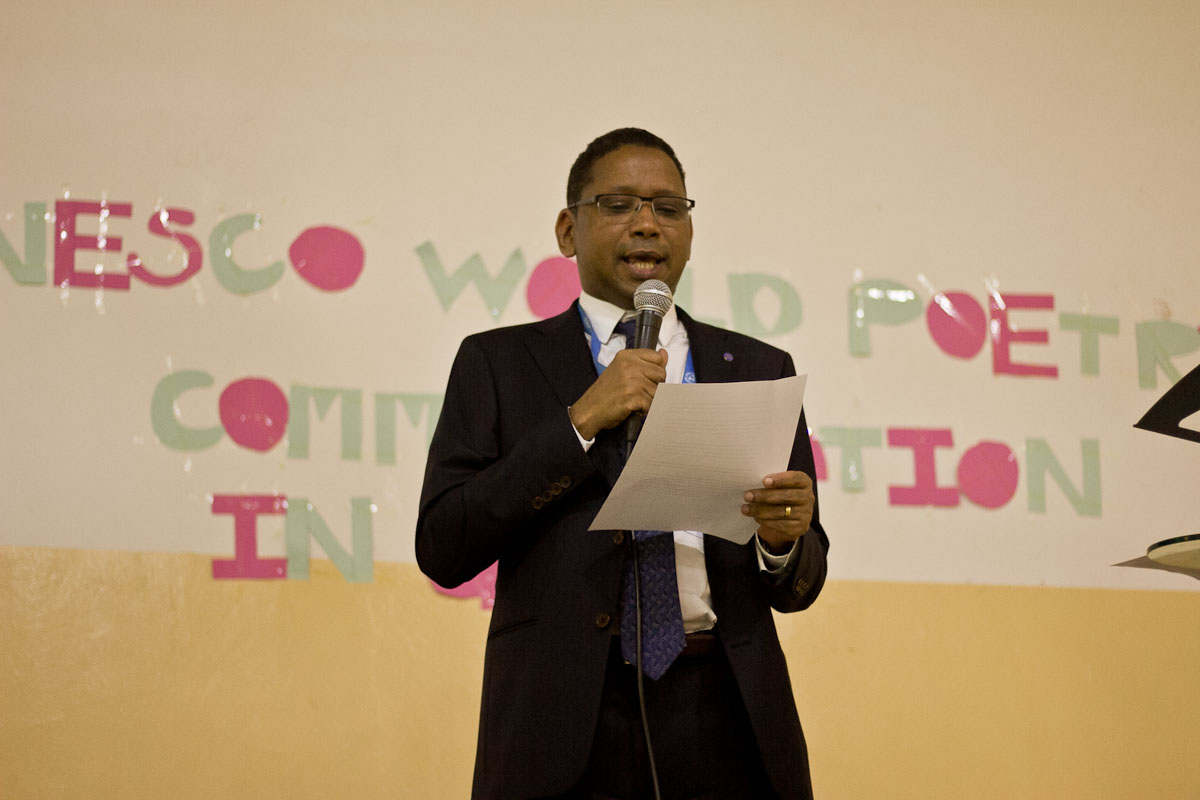
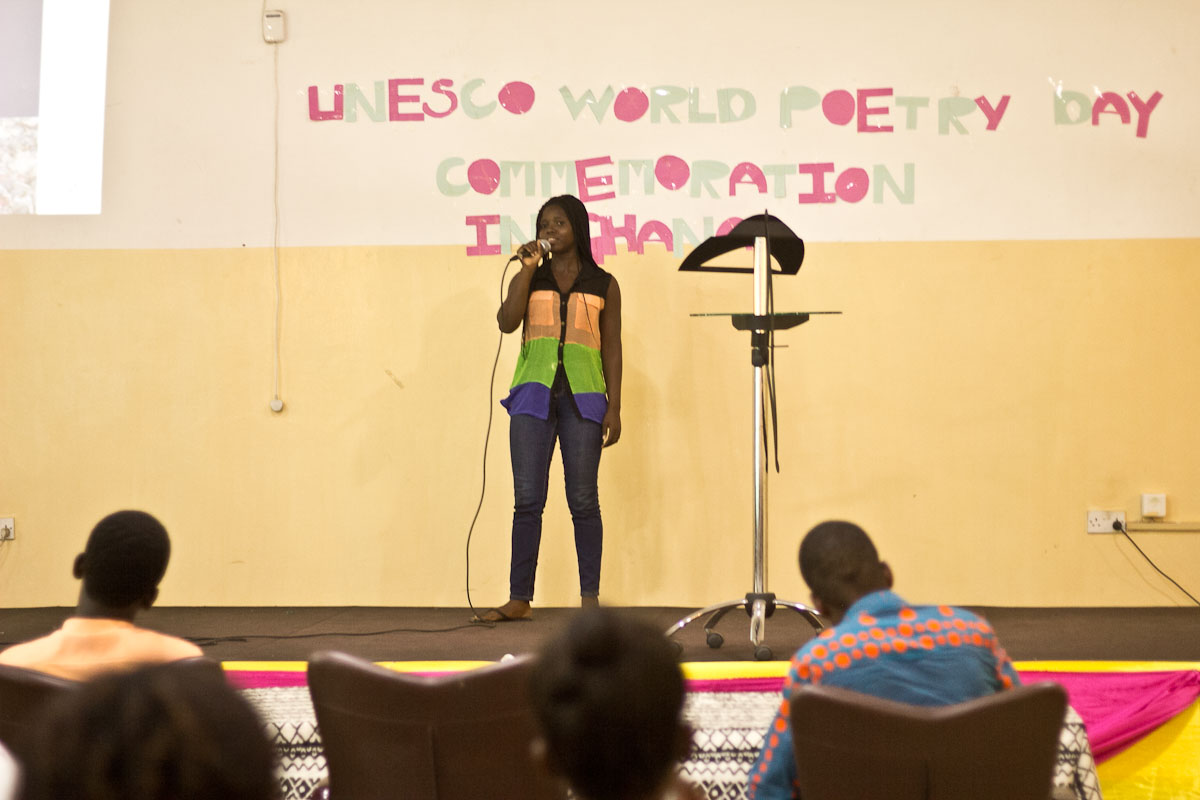
The event which has already been preceded by a workshop, started some few minutes after the arrival of the Head of Office and Unesco Representative in Ghana, Mr. Abdourahamane Diallo. He was accompanied by Carl Ampah, the National Programmes Officer of Unesco in Ghana.
He read Audrey Azoulay, the Unesco director’s message after some poems were performed and followed by the Poem of The Day written by Leander David. The message that he read, touched on poetry as a well-crafted and rich expression from within, that sped up human progress linking different cultures together.
In his message, he also touched on the poem “Howlin at the moon” by Wayne Keon. This poem spoke of the relationship that exists between us and things around us. We were identical and should know more about ourselves by observing things around us.
“Poetry is important for the safeguarding of often-endangered languages, as well as the maintenance of linguistic and cultural diversity”, Audrey Azoulay. This saying was in line with JUPI’s agenda for this year’s celebration. It was evident in performances which were done in both English, foreign languages and local languages. A typical performance was that of Ama’s “Emrika”. She is a movie producer who read in Ga, Twi and English. Leander also did a Spanish poem blending it with Ga folk songs.
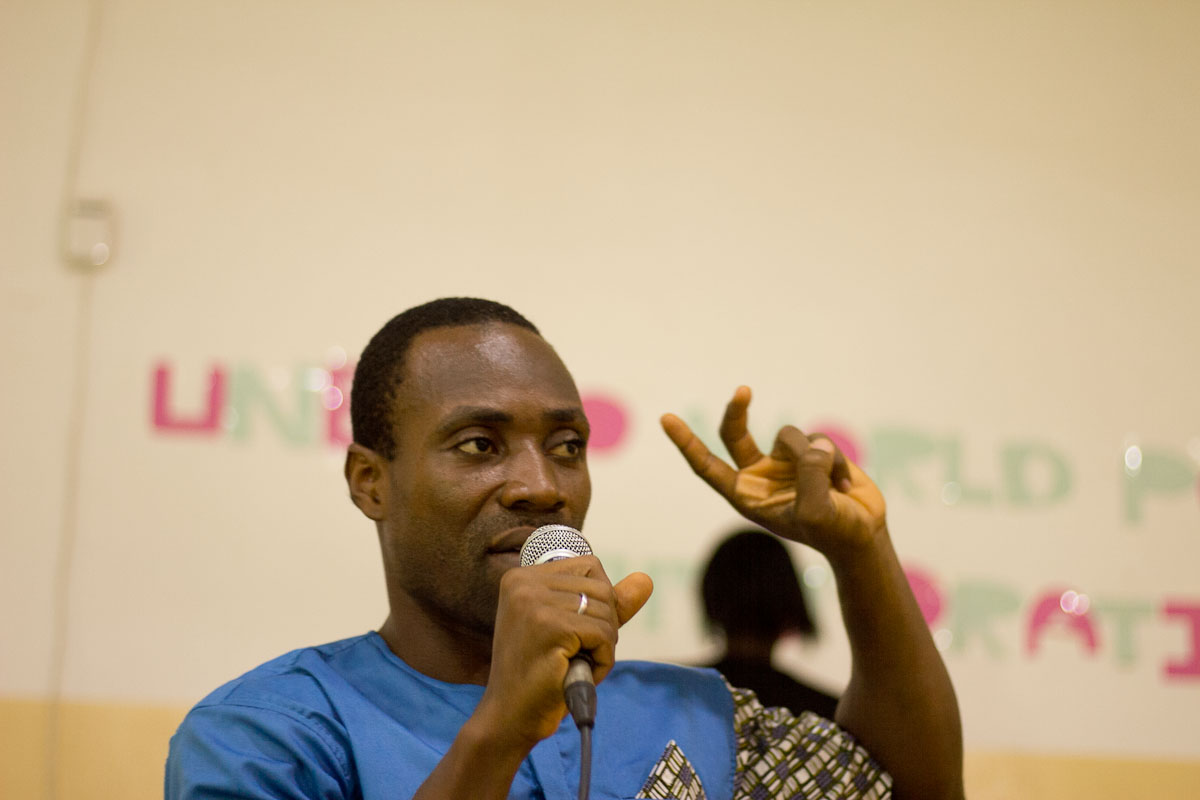
Jupi has always showed the way in changing the society with the arts (#ArtsForChangeGh) since its inception in 2017, merging up with Walk The Talk Group to form the Jupi Team. Unlike other celebrations elsewhere, the day saw an inclusion of the mentally challenged in society. This was a follow up of the last year’s initiate to champion their cause, make them relevant and for them to cross the societal boundary that keeps them behind the walls of a hospital.
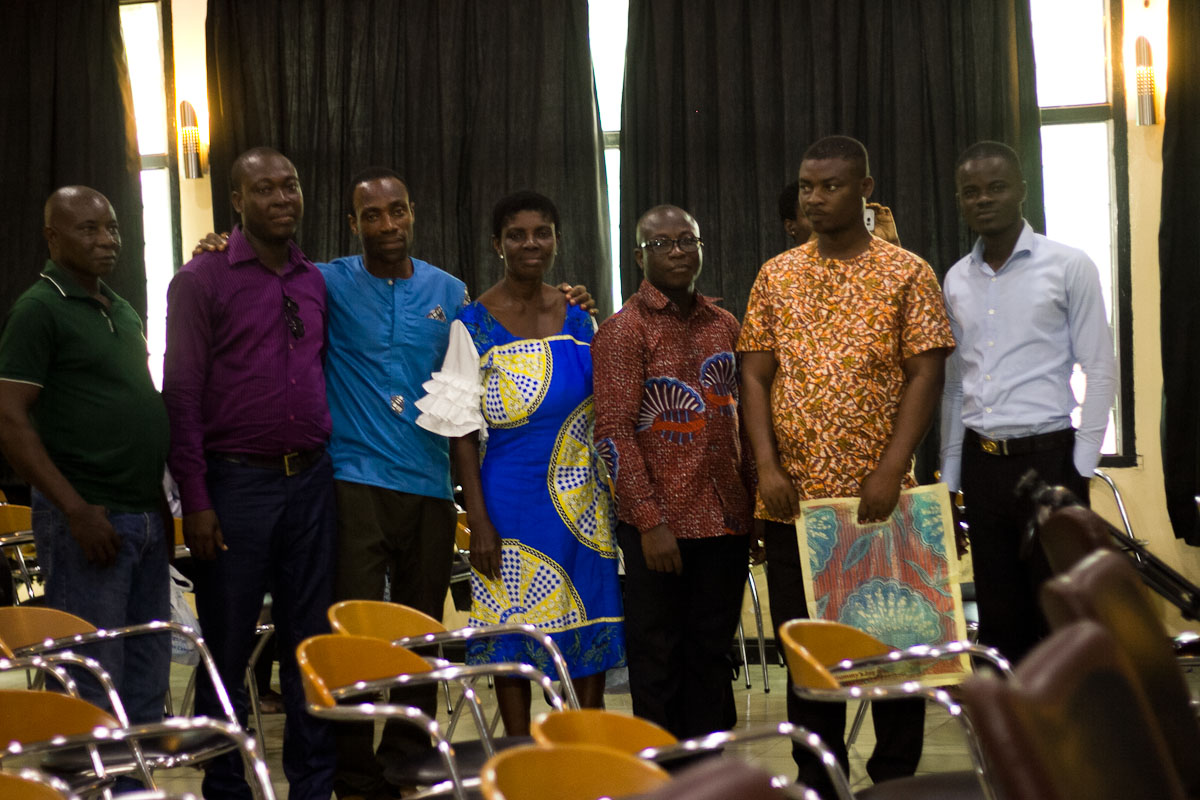
While the JUPI Mental Health Project gradually takes form on a pilot project other activities will also soon unfold with the arts (poetry) taking a centre stage. “Having the arts can be relevant, play a major role in social change when nations all over the world see it as a tool, the driving force and a means to an end”, Leander David.
The study of languages had been a major concern and as well had played a pivot role in most of Jupi’s activities. For the sixth conservative time, clubs within the University of Ghana School of Languages have participated in the commemoration of Unesco World Poetry day. The first, which was graced by the out-gone Unesco Representative and Head of office in Ghana, Mr Dos Santos and the current one which was graced by Mr Abdourahamane Diallo. For us at Jupi, we believe that there is an inverse relationship between creative arts and languages and we have proved that over the years organizing literary activities at the University of Ghana, Legon.
Themes
Forging interpersonal relationships among ourselves is very important. From “Howlin at the moon”, if the moon was supposed to talk and the stars were to walk by our aid we were expected to make things around us function properly through our interaction with them. Applying this to life, we would need to operate within a convenient and suitable language, a language all will understand, thus an indigenous language.
The theme of hope was captured in the fourth stanza of the 2019 Unesco poem of the day written by Leander David. Despite the desolation, silence, darkness, emptiness in the first, second and third stanza, we saw how a candle light could shine up to the top of a mountain. Telling us of smaller beginnings, little efforts that could go a long way to touch lives and bring about change. This change could be possible with consistency, the spirit behind Jupi’s success. See updates on our 2014, 2016, 2017 and 2018 celebrations.
The performance of Leander David’s mental health campaign poem for last year, “Without choices” was performed by Poet Samuel. He is a shining light and hope to all suffering from mental health. Through him a lot more could gain their confidence, break this deadening silence and yoke on sufferers of mental health and help them blend well with society. The poem talks of a moment in between tears and smiles, a moment when not well managed will send one into ruins. It therefore calls for the need for all to learn to stay calm at certain times, spend enough time before taking actions as an the least error will let you lose everything.
Poets and poems
A tribute was read by Leander David for the gentle soul of one of the greatest music legends in the country, Prof. J.H Nketia, a pioneer to ethno-music. There was dance ministration from the “New Lordz Dance Crew”. Poems performed in foreign languages came from Uriel (Kiswahili) “Afrika nawatu waki”, Eunice Anyele Charkley (Spanish ) “La transperencia del silencio, Gloria ( Arabic) “Las tu adrii” – I don’t know, Everloving (Russia) “Krasavitsa perid zerkalam” and George(Russian) “ Zimnoye utra” . Others which were in English were from Civilian, Michael Oduro (I am waiting for you), William Arhin ( Song of Tomorrow) and Poet Samuel (Smiles like tears)
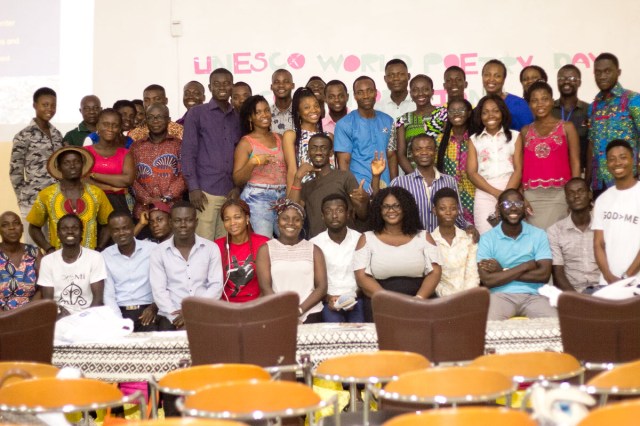
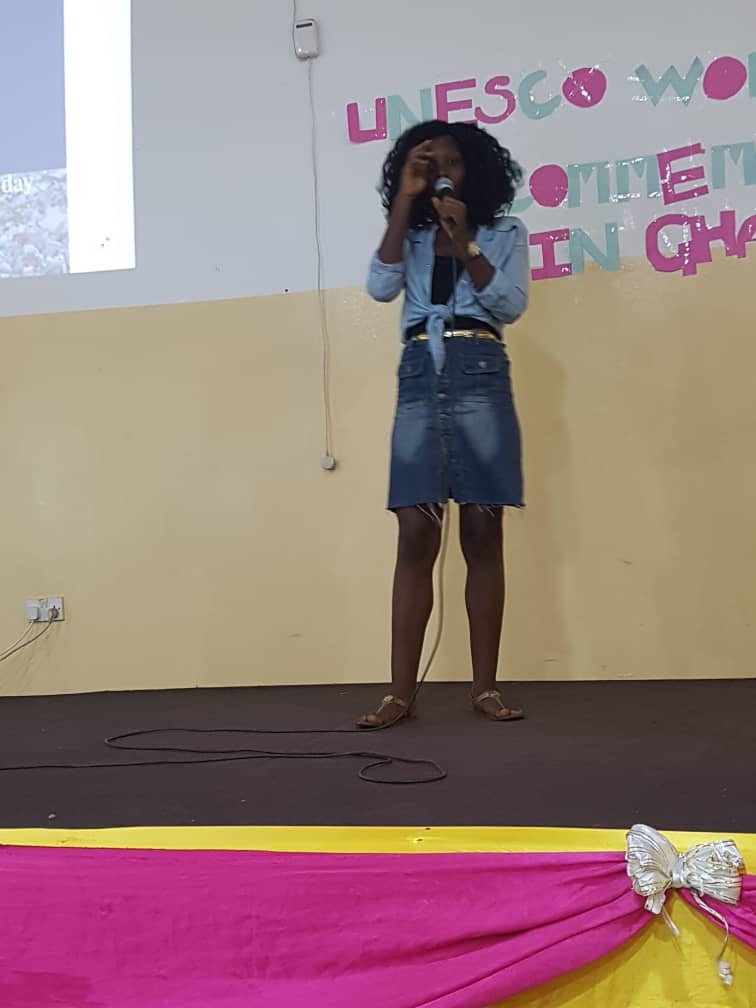
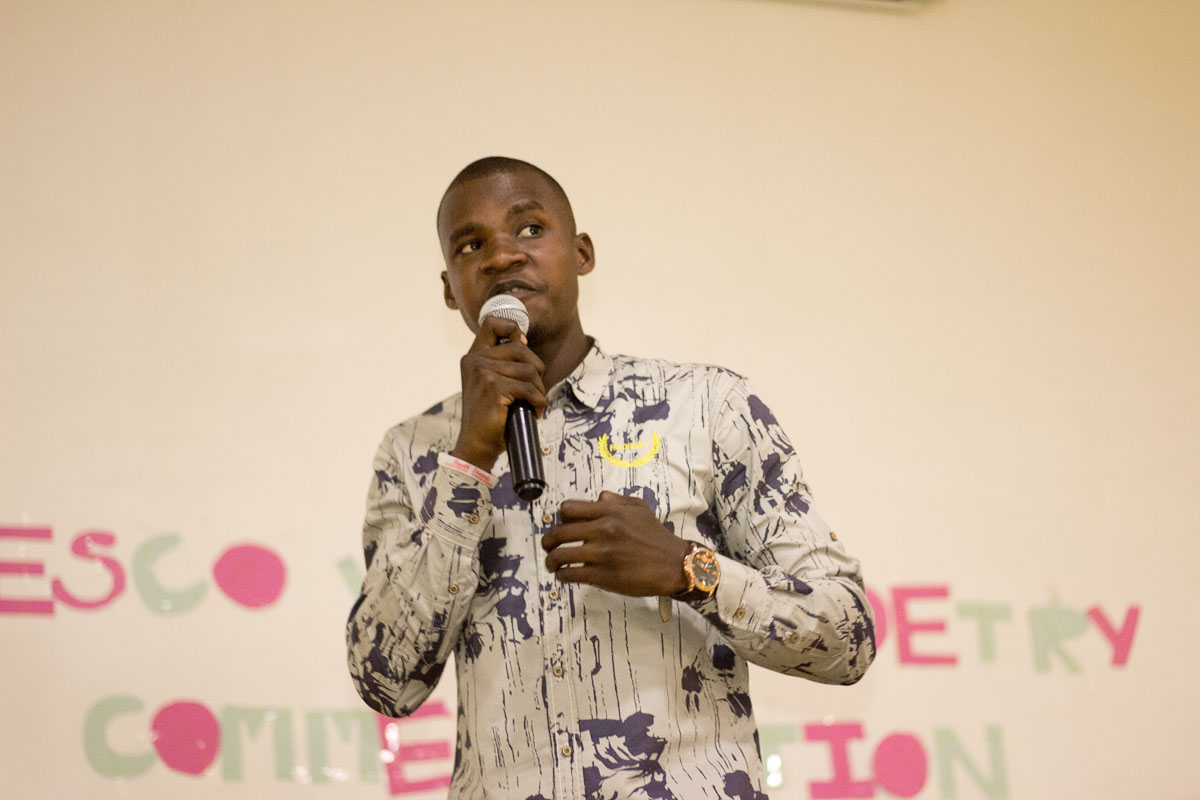
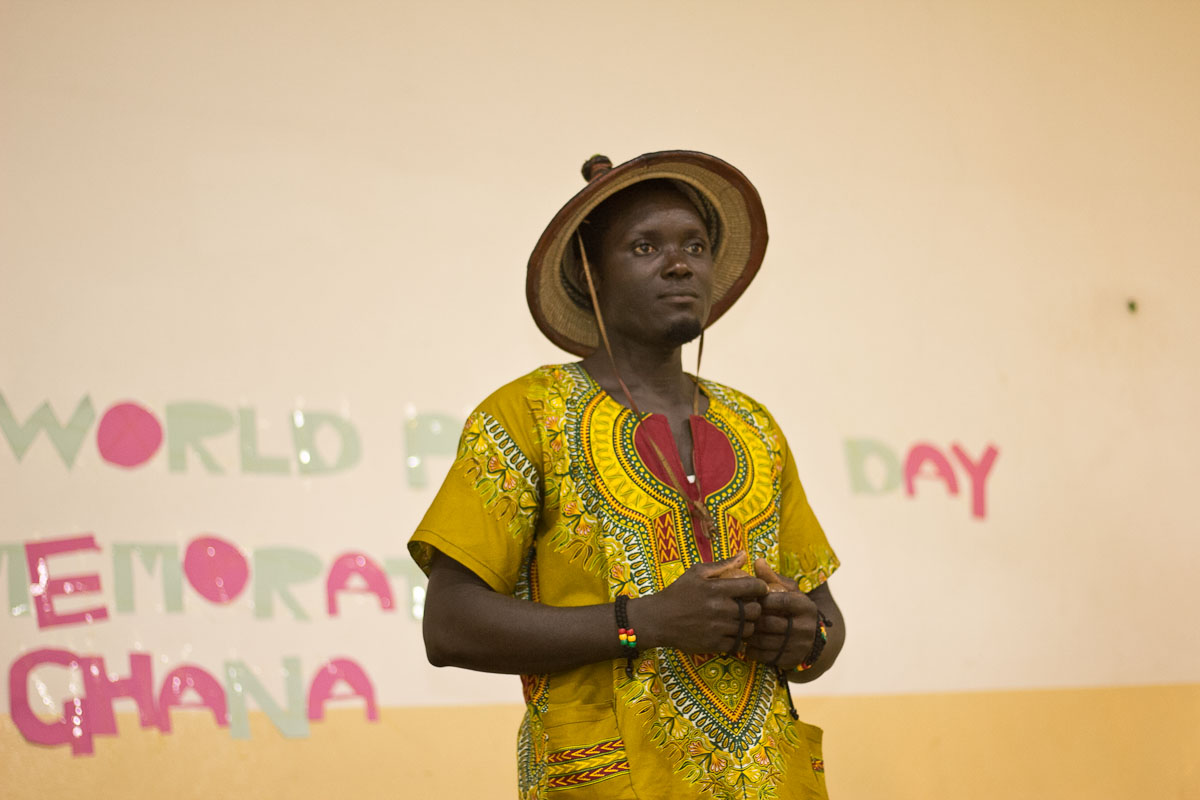
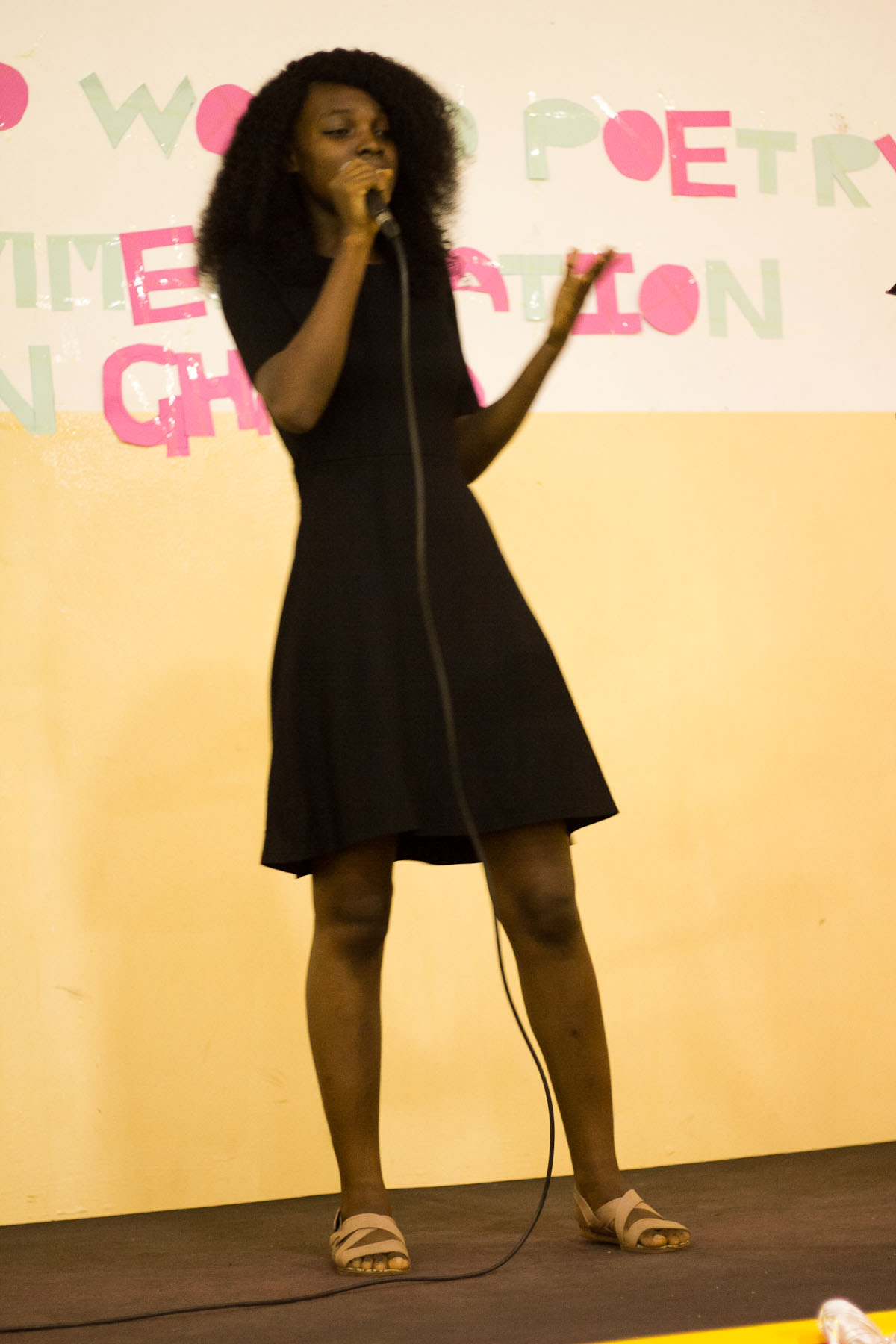
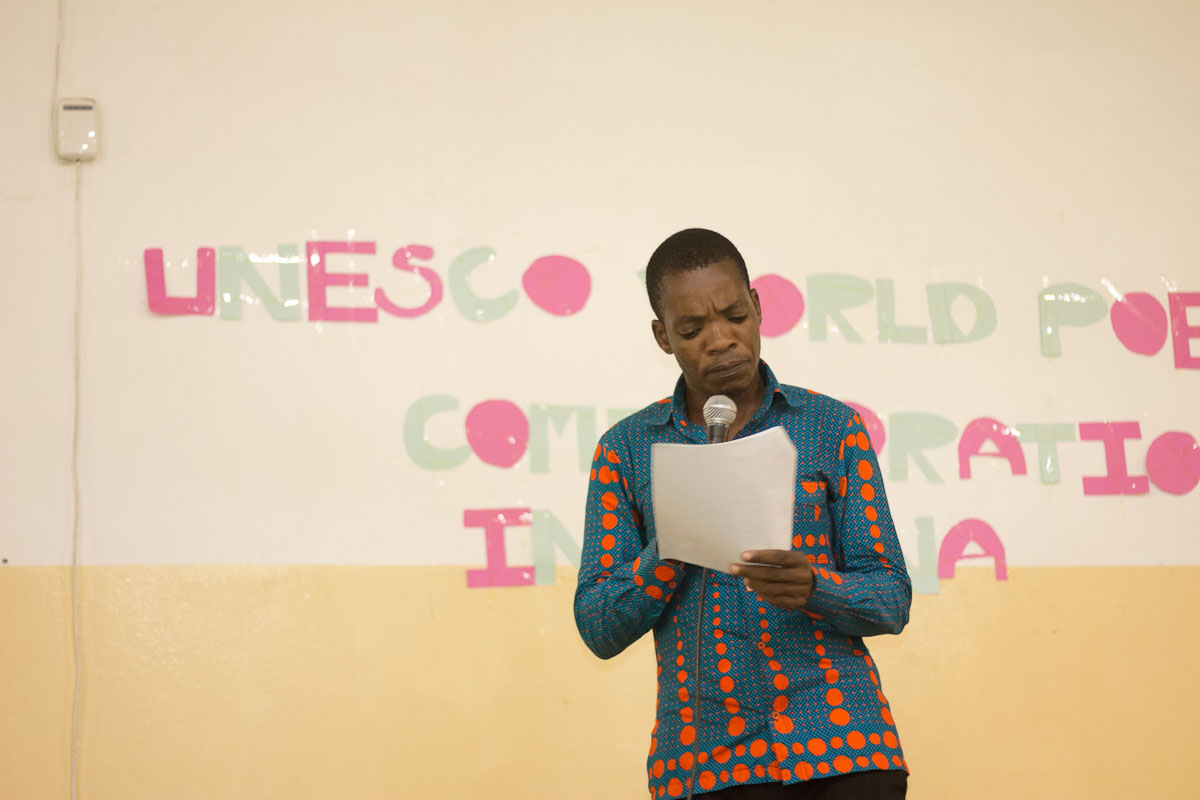
All ended with a group picture, refreshments and interactions. Pictures of some of the poets who made it at the commemoration have been captured below. For other information on the Unesco World Poetry Commemoration over the years search #ArtsForChangeGh Unesco or this link which has all of Jupi’s activities


 Jubilee Projections International | JUPI
Leave a reply to Kristian Cancel reply